

Payment evidence is an important part of a VETASSESS Skills Assessment. If you are applying for an occupation under the professional category, you may need to provide payment evidence to support your claimed employment and show that the employment was remunerated.
Payslips are one of the payment evidence types, but not the only type of evidence that VETASSESS requires. Depending on the applicable payment requirement, VETASSESS may require other types of evidence like tax documents, salary payments reflected in bank statements, or employment-related superannuation or pension documents.
This guide explains VETASSESS payslip requirements for professional occupation applications, what payment documents to prepare, what to do if payslips are unavailable, and the difference between payment evidence and a Statement of Service.
Key Highlights
- Mandatory Details: Each payslip must clearly show your legal name, employer name, pay period, payment date, gross/net earnings, and deductions.
- Acceptable Alternatives: If payslips are unavailable, VETASSESS accepts official tax records, superannuation/pension statements, or bank statements showing identifiable employer deposits.
- Payslip vs. Statement of Service: Payslips verify payment; Statements of Service verify job roles, hours, and responsibilities.
- Statutory Declarations: Useful for explaining missing documents, but cannot replace official third-party financial records.
What Are the VETASSESS Payslip Requirements?
Regarding professional occupations, VETASSESS indicates that applicants need to submit evidence of payments made for their employment claims. The evidence could be two payslips or, even better, the first and last payslips for the employment role.
Also, regarding the payslips, VETASSESS indicates that applicants are not required to submit all the payslips they received while employed. In cases where the employment duration is more than three years, the assessors recommend submission of payslips from the start, middle, and end of the employment duration.
How many payslips should you prepare?
When following the VETASSESS payslip requirements, professional occupation applicants should consider the following payment evidence:
- Two payslips per employment position, preferably the first and last.
- Three payslips for employment exceeding three years; one at the beginning, middle, and end of the employment period.
- Your payslips must indicate who the applicant is and who the employer is.
- Depending on your occupation and circumstances, more evidence of payment may be asked for.
Note: The above is specific to certain occupations and application conditions; it should not be taken as a general guideline for all VETASSESS pathways.
What Should Your Payslip Show?
Different countries use various payslip formats depending on the country, company, and payroll systems used. There is nothing wrong with each payslip having a different appearance.
When preparing documents to meet the VETASSESS payslip requirements, ensure that the following information is present on your payslips, where applicable:
- Your name
- Employer’s name
- Pay period
- Date of payment
- Amount of gross or net payment
- Other payroll data that may assist in identifying the payment
The key consideration is whether the document contains enough verifiable information to link the payment to your employment.
What Other Documents Can Prove Salary Payments?
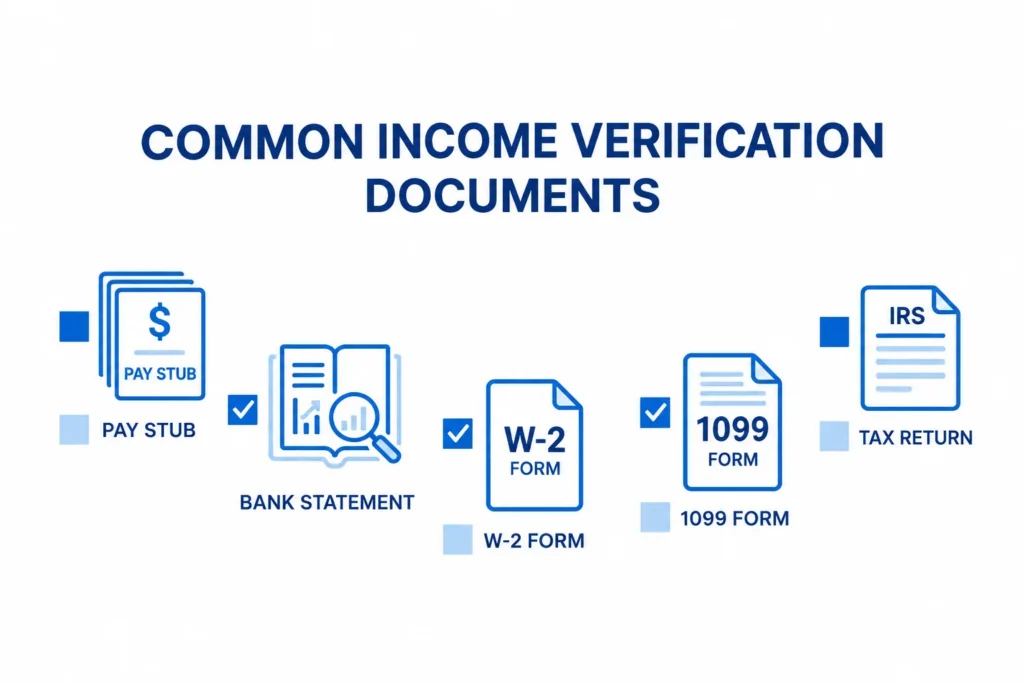
Payslips are not the only form of salary proof for skills assessment. VETASSESS’s current professional occupation guidance identifies several types of payment evidence that may be used.
1. Official Government Tax Records
Taxation documents can provide independent evidence of income and employment payments. Depending on the country and documents available, these may include:
- Income statements
- Payment summaries
- Tax group certificates
- Tax notices of assessment
Where applicable, the records should identify both the applicant and employer.
2. Bank Statements Showing Salary Payments
Bank statements can provide useful employment payment records when they clearly show salary payments associated with the employer.
VETASSESS refers to bank statements that show the employer’s name and income deposited.
Before submitting bank statements:
- Check that your name is visible.
- Ensure the employer or relevant payer can be identified.
- Highlight the relevant salary deposits.
- Redact bank account details and unrelated transactions where appropriate.
- Where possible, make sure the records support the employment period being claimed.
Do not assume that an unexplained cash deposit or unidentified transfer will establish paid employment. The payment should be capable of being linked to the claimed employment.
3. Superannuation or Pension Records
Employment-linked superannuation or pension records may also provide payment evidence where they identify the applicant and employer.
These records can be particularly useful when older payslips are difficult to obtain. However, applicants should check that the document meets the evidence requirements applicable to their VETASSESS assessment.
Payslips vs Statement of Service: What’s the Difference?
Payslips and a Statement of Service serve different purposes. They cannot be used as one another’s replacement
The Statement of Service can give information like when you were employed, the position you held, the number of hours of work, and the nature of employment, among others. The payment proof is meant to help prove that there was monetary payment for your employment.
For instance, if you have a payslip, you would be able to show that you were receiving money for the services that you were offering, but you would not be able to show what duties you were performing. A reference on the duties that you had at work cannot serve the same purpose as the payslip.
In case of professional occupations, these documents need to be prepared together.
How to Prepare Your VETASSESS Payslip Evidence
Once you understand the VETASSESS payslip requirements and know what records are available, organise your documents before starting your application.
Step 1: Categorize Your Documents by Employer and Occupation
Make a different folder for each employer and each occupation applied for. If you had more than one job at the same employer, categorize the evidence accordingly.
Step 2: Select Relevant Pay Slips
To meet the VETASSESS payslip requirements, begin by identifying payslips that cover the commencement and termination dates of each occupational employment position.
Also, in the case of occupations that have lasted for more than three years, select the pay slip from the middle of the occupational employment period according to VETASSESS.
Step 3: Check for Consistency in Information Provided
Cross-check your information in relation to:
- Payslips
- Statement of service
- Tax slips
- Bank statement
- Contract of employment, if there was any
Ensure consistency in the names and employment dates provided. The differences in company names and dates should be explainable.
Step 4: Ensure that the Documents Are Easy to Read
VETASSESS recommends that applicants provide clear, high-quality colour scans of their original documents. Prior to scanning a payslip, ensure that all necessary information is legible.
Do not use:
- Blurred scans
- Truncated documents
- Truncated names/dates
- Illegible payment amounts
- Low-quality photos
Step 5: Verify Translation Requirements
If your documents are not written in English, check the current translation requirements regarding the original document and its English translation.
The translation requirements may differ from case to case due to the varying assessment instructions. Applicants should adhere to the current guidelines released by VETASSESS.
What If You Have Missing or Incomplete Payslips?
If you cannot provide all the documents normally used to meet the VETASSESS payslip requirements, you may still be able to support your employment claim with other payment evidence.
Consider taking the following steps:
- Reach out to your former employer: Inquire with their HR, payroll, or finance department whether archived payslips or payroll records are available.
- Review taxation records: Search for any official income records, payment summary, or other relevant tax records.
- Retrieve your bank statements: Get any historical statements reflecting payment of your salary where possible.
- Consult superannuation or pension records: This may provide further payment records relating to your employment. Consider consistency between your records and the Statement of Service and period of employment claimed.
- Review the current VETASSESS requirements: In case your circumstances are unique, review the appropriate evidence requirements before making your application.
What About a Statutory Declaration?
A statutory declaration should not be treated as a substitute for third-party payment evidence. It may help explain missing or unusual employment records, but it should be supported by other official or third-party documents where available.
If a payslip is missing, you may use a statutory declaration to explain the circumstances, while also providing other third-party employment or financial evidence where available.
Common VETASSESS Payslip Evidence Mistakes to Avoid
Understanding the VETASSESS payslip requirements can help you avoid common mistakes when preparing your employment evidence package.
1. Thinking All Payslips are Necessary
You will not usually need to submit all payslips from your professional occupation employment period. Adhere to the latest guidelines in terms of number and types of payments needed.
2. Supplying Just a Reference Letter
Your Statement of Service and payment evidence have different purposes. Do not assume that a comprehensive reference letter automatically constitutes payment evidence.
3. Submitting Poor-Quality Documents
Documents that are blurry, cropped or incomplete will obscure necessary information.
4. Ignoring Employer Name Discrepancies
It is important to consider any discrepancies between the name of your payroll company or other organization on the payslip and the name of the employer listed on your Statement of Service.
5. Referring to Bank Deposits Without Any Identifying Information
Bank statements showing payments that cannot be linked to the employer may make it difficult to verify the payments. When it is possible, supply evidence that can prove identity of the employer.
6. Substituting a Statutory Declaration for Employment Evidence
Statutory declarations should not be treated as substitutes for third-party evidence.
VETASSESS Payslip Evidence Checklist
Before submitting your application, use this checklist to check whether your documents meet the VETASSESS payslip requirements:
- Payslips selected for each employment position claimed.
- First and last payslips selected where applicable.
- Beginning, middle and end payslips selected for employment spanning more than three years, where applicable.
- Alternative payment evidence obtained where payslips are unavailable.
- Employee and employer names verified across documents.
- Relevant salary deposits highlighted in bank statements.
- Unnecessary personal or financial details redacted where appropriate.
- Documents scanned clearly and are legible.
- English translations obtained where required.
- Statement of Service prepared separately from payment evidence.
- Employment dates checked for consistency.
- Current VETASSESS requirements reviewed before submission.
How ImmiDocs Can Help With VETASSESS Employment Evidence
Preparing payment evidence is only one part of a VETASSESS skills assessment. Applicants may also need to organise employment references, Statements of Service and other supporting documents so that their employment history is presented consistently.
If you are unsure whether your employment documents provide sufficient supporting evidence, ImmiDocs can assist with document preparation and review.
Our support can include:
- Reviewing employment documents for consistency
- Helping prepare or improve Statements of Service
- Identifying potential gaps in employment documentation
- Organising supporting employment evidence
- Guiding preparing documents for a VETASSESS application
Professional document preparation cannot guarantee a positive skills assessment outcome, as VETASSESS makes the final decision. However, organising your evidence carefully can help you submit a clearer and more complete application.
Final Thoughts
Preparing VETASSESS payslip evidence is not simply about collecting a large number of payslips. The aim is to provide clear, verifiable payment records that support your claimed employment.
For professional occupation applications, start by checking the current VETASSESS requirements, prepare the appropriate payslips or alternative payment records, and make sure they are consistent with your other employment documents.
If your employment history includes missing payslips, different employer entities, cash payments, or other unusual circumstances, review the available evidence carefully before submitting your application.
Frequently Asked Questions
1. How many payslips are needed to prove my employment for VETASSESS skills assessment?
VETASSESS generally indicates two payslips per position, preferably the first and last. For employment exceeding three years, payslips from the beginning, middle, and end may be required.
2. Is it necessary to submit all payslips from all months of employment?
No. It is not necessary to submit all payslips.
3. Is there something else I can submit instead of payslips for a VETASSESS application?
Depending on the occupation and period of employment, you may submit taxation records, bank statements with salary payments, or employment-related superannuation or pension records.
4. Can I submit bank statements as evidence of salary payments?
Yes. Bank statements may be used as payment evidence when they clearly identify the employer and salary payments.
5. Should I translate my payslips into English?
If your payslips are not in English, provide a translation of the required documents following the instructions provided by VETASSESS.
6. Can I provide a statutory declaration as an alternative to payslips?
Statutory declarations are not a substitute for third-party evidence of payments. Use other kinds of evidence when available.